

Mastering Dental Implants
Dental implants replace missing teeth to restore appearance, chewing, and confidence. This guide covers implant types in Plano, TX, the procedure and recovery, cost factors, and why patients choose Dr. Rudy Aldaragi.
What Are Dental Implants and How Do They Restore Your Smile?
Dental implants are artificial roots, typically titanium, placed in the jaw to support crowns or bridges. They osseointegrate with bone to restore chewing, speech, and appearance; titanium is well-supported for durability and long-term success.
Titanium Dental Implants: High Success & Long-Term Survival
The use of titanium dental implants has consistently changed the way of rehabilitating patients in modern dentistry and can count on high long-term survival and success rates.
The effect of titanium surface modifications on dental implant osseointegration, M Annunziata, 2015
What are the main components of dental implants?
The main components include:
- Titanium Post: The implanted root placed in the jawbone.
- Abutment: Connector that attaches the crown to the post.
- Crown: The visible tooth restoration, often porcelain, ceramic, or zirconia.
Together they form a durable, natural-looking replacement for missing teeth.
How do dental implants function like natural teeth?
By integrating with the jawbone, implants restore chewing and help prevent post-extraction bone loss, preserving facial structure and appearance.
Which Types of Dental Implants Are Available in Plano TX?
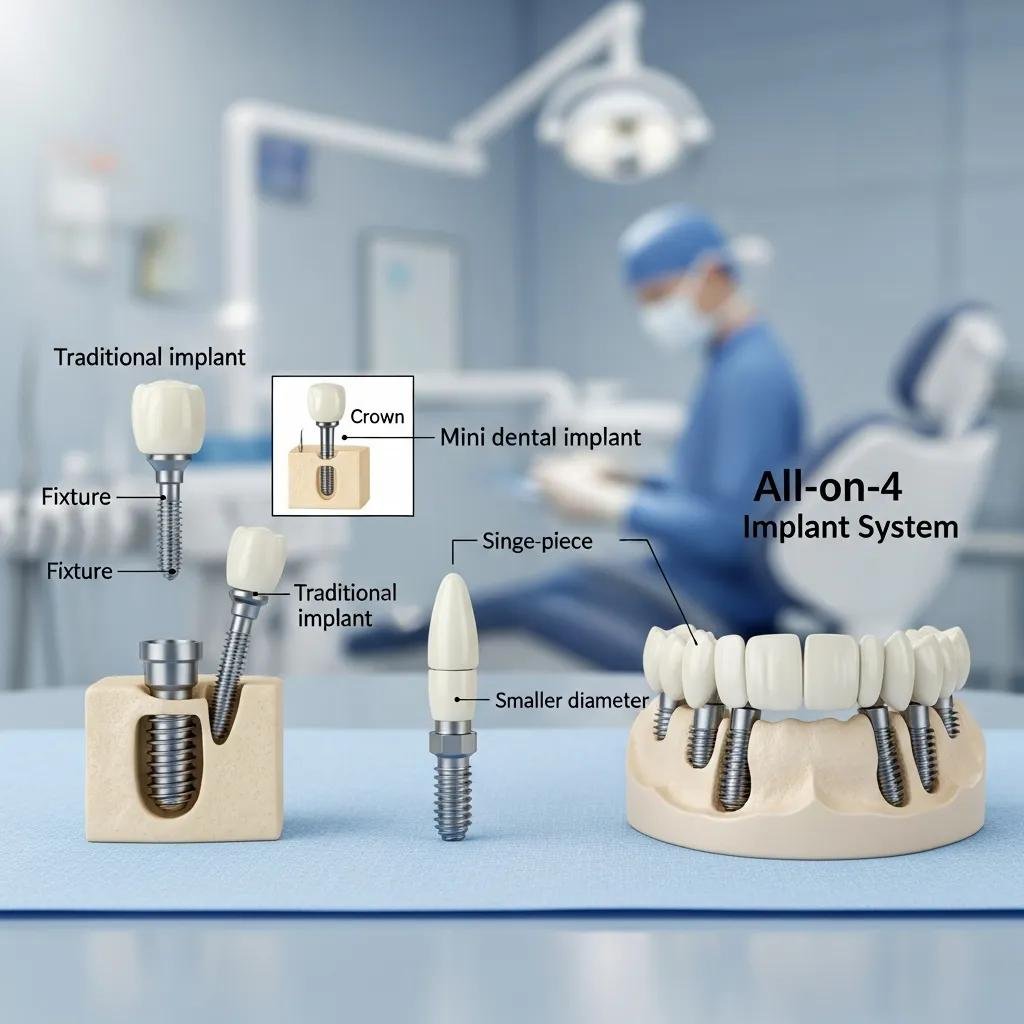
Plano offers several implant options to match different needs and jaw anatomy.
What are All-on-4 dental implants and who are they for?
All-on-4 uses four implants to support a fixed full-arch prosthesis, ideal for patients missing most or all teeth and often avoiding bone grafting.
Research has evaluated full‑arch solutions and immediate versus delayed loading for these cases.
Full-Arch Dental Implants: Options for Edentulous Patients
Mandibular full-arch restoration is a good and successful treatment option for totally edentulous patients. In the past years, several studies have described the placement of 4 to 6 implants to restore this type of case; however, an option using 3 dental implants placed in strategic and specific positions could also be an alternative.
Immediate loading of four (all-on-4) post-extractive implants supporting mandibular cross-arch fixed prostheses: 18-month follow-up from a multicentre prospective …, 2012
Suitable candidates can see quick functional and aesthetic improvement.
All-on-4 Dental Implants: Immediate Function & Prosthesis
These implants were immediately loaded with a full fixed acrylic prosthesis within 2 hours of -sinus dental implants, bone morphogenic protein 2, and immediate function for All-on-4.
Contemporary “All-on-4” concept, 2015
Studies compare immediate and delayed loading outcomes.
Immediate vs. Delayed Loading for Edentulous Jaw Implants
The purpose of this study was to compare the outcomes of immediate and delayed rehabilitation of edentulous jaws by means of two straight and two tilted implants after one year of function.
Effects of immediate and delayed loading on the outcomes of all-on-4 treatment: a prospective study, S Akbari, 2016
How do mini dental implants differ from traditional implants?
Mini implants are narrower and require less invasive placement. They can stabilize dentures or suit patients with limited bone and typically allow faster recovery, though they are less common for single-tooth restorations than standard implants.
What Is the Dental Implant Procedure and What Should You Expect During Recovery?
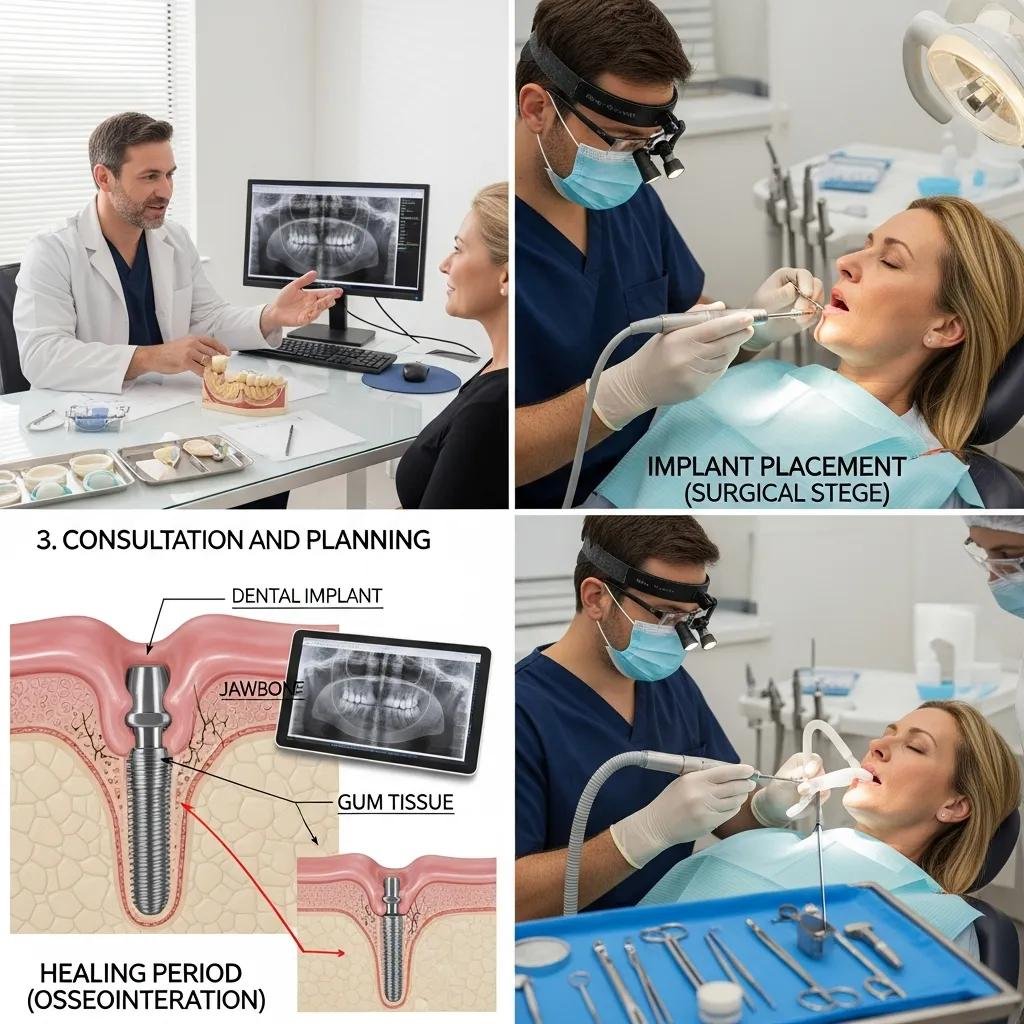
The implant process follows predictable stages to ensure a successful outcome.
What are the step-by-step stages of dental implant surgery?
- Consultation: Exam and treatment planning to confirm suitability.
- Implant Placement: The titanium post is placed in the jaw under anesthesia.
- Healing Period: Typically 3–6 months for osseointegration.
- Abutment Placement: The abutment is attached once healing is sufficient.
- Crown Placement: A custom crown completes the restoration.
How can sedation dentistry improve your implant experience?
Sedation reduces anxiety and discomfort, enabling efficient treatment and smoother recovery.
How Much Do Dental Implants Cost in Plano TX and What Financing Options Are Available?
Costs vary by implant type, case complexity, and provider experience.
What factors influence the cost of dental implants?
Common factors include:
- Type of Implant: Standard, mini, or full-arch options have different costs.
- Location: Regional practice overhead influences prices.
- Additional Procedures: Bone grafts, extractions, or sinus lifts add cost when needed.
Does insurance cover dental implants and what flexible payment plans exist?
Insurance coverage varies; some plans may cover part of treatment. Many practices, including Dr. Aldaragi’s, offer financing to spread payments and make care more affordable.
Why Choose Dr. Rudy Aldaragi as Your Dental Implant Specialist in Plano TX?
Dr. Rudy Aldaragi has over a decade of implant experience, modern technology, and a patient-focused approach.
What expertise and technology does Dr. Aldaragi bring to implant dentistry?
He uses advanced imaging and precise techniques to plan and place implants, prioritizing comfort and predictable results.
What do patients say about their dental implant results with Dr. Aldaragi?
Patients report natural-looking, functional results, compassionate care, and improved confidence and quality of life.
What Are the Benefits of Dental Implants for Long-Term Oral Health and Confidence?
Implants restore function and appearance while preserving jawbone and facial structure, providing a durable, natural-feeling solution.
How do dental implants prevent bone loss and preserve facial structure?
Replacing the tooth root stimulates the jawbone, reducing post-extraction bone loss and supporting facial contours and oral health.
In what ways do implants improve function, aesthetics, and self-confidence?
Implants restore comfortable chewing and speech and closely match natural teeth, which often boosts social confidence and daily comfort.
| Type of Implant | Description | Ideal Candidates |
|---|---|---|
| Traditional Implants | Standard titanium or titanium alloy implants for single or multiple teeth | Patients with sufficient bone density |
| Mini Implants | Smaller diameter implants for less invasive procedures, often used to stabilize dentures | Patients with limited bone or those seeking quicker recovery |
| All-on-4 Implants | Full arch restoration with four implants | Individuals with complete tooth loss |
This table summarizes implant types and typical candidates to help guide your choices.
| Cost Factor | Description | Estimated Range |
|---|---|---|
| Type of Implant | Varies based on the implant type chosen | $1,000 – $3,000 per implant |
| Additional Procedures | Costs for bone grafting or extractions if needed | $300 – $3,000 |
| Location | Geographic area can influence pricing | Varies by region |
These cost factors provide a practical starting point when planning implant treatment.
Dental implants are a major advance in restorative dentistry, offering reliable, natural-looking replacements so patients in Plano, TX can regain function and confidence.
Frequently Asked Questions
What should I expect during the dental implant consultation?
At the consultation your dentist will examine your mouth, take X-rays or 3D scans, review your medical history, and recommend the best implant option. Ask about procedure steps, recovery time, and cost so you leave with a clear plan.
How do I know if I am a good candidate for dental implants?
Good candidates have adequate bone and overall health. Age, gum disease, and smoking may affect eligibility. Your dentist will assess you and may suggest bone grafting if needed.
What are the maintenance requirements for dental implants?
Care for implants like natural teeth: brush, floss, and attend regular check‑ups. Your dentist can recommend specific products or techniques. Avoid tobacco and maintain a balanced diet to support implant health.
Can dental implants be placed immediately after tooth extraction?
Some implants can be placed immediately after extraction, which can preserve bone and shorten treatment. Whether immediate placement is suitable depends on the site and other clinical factors; your dentist will advise.
What are the differences between dental implants and dentures?
Implants are permanent and fuse with the jawbone for stable, natural-feeling results. Dentures are removable and sit on the gums; they can be more affordable but may require adhesives and periodic adjustments.
How do I choose the right dental implant specialist?
Choose a specialist based on implant training, experience, and patient reviews. Ask about success rates, technology used, and review before-and-after cases during your consultation to assess fit.
Conclusion
Dental implants offer a reliable, attractive solution for tooth loss, improving function and confidence. With options such as traditional, mini, and All‑on‑4 implants, patients can find the right fit. Choosing an experienced specialist like Dr. Rudy Aldaragi supports a successful outcome and positive experience. Take the first step toward restoring your smile by scheduling a consultation today.