
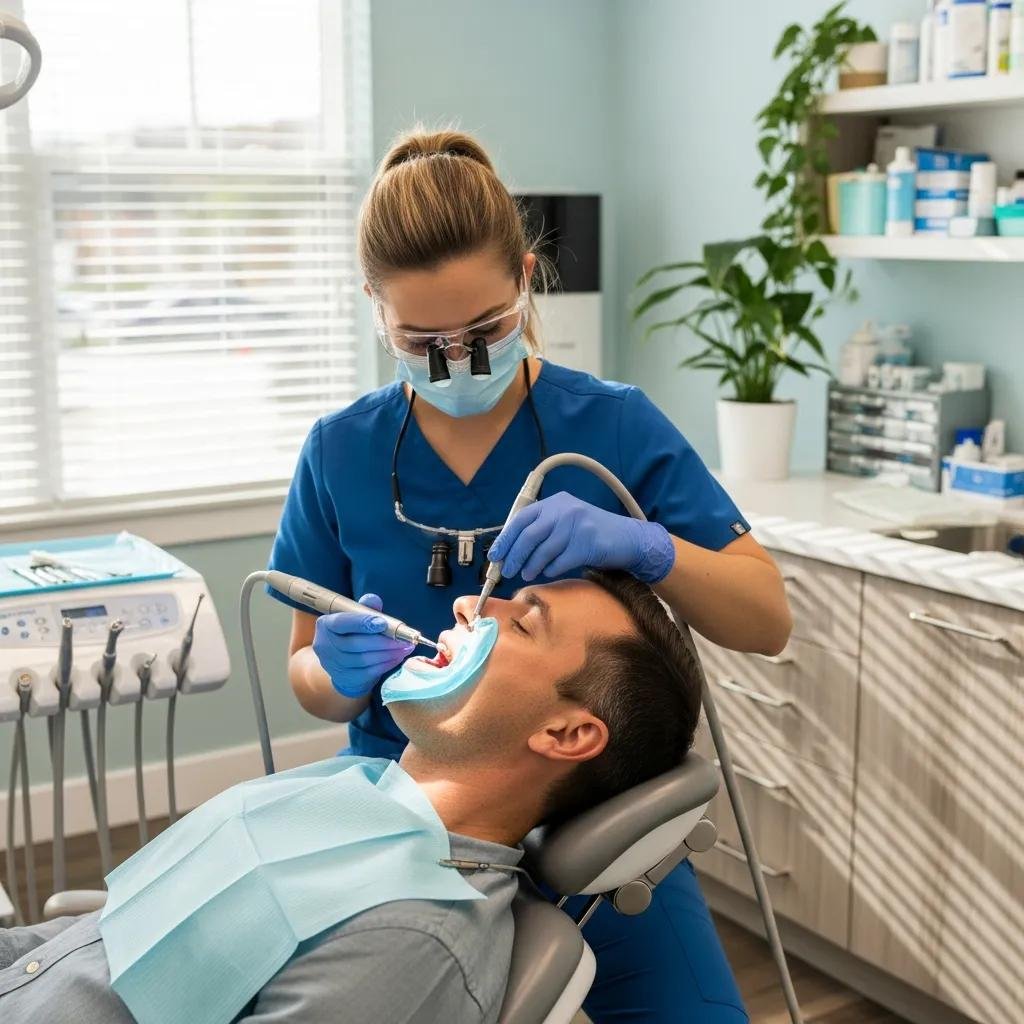
Unlock the Benefits of Teeth Cleaning
Good oral health supports overall health, and professional teeth cleaning is a key preventive step. This guide covers what cleanings include, the main benefits of regular visits, links between oral hygiene and systemic health, and how to schedule at Rudy Aldaragi DDS in Plano, TX.
What Is Professional Teeth Cleaning and Why Is It Important?
Professional teeth cleaning (prophylaxis) removes plaque, tartar and surface stains to help prevent cavities and gum disease. Hygienists use hand and ultrasonic instruments to reach areas that are hard to clean at home, reducing harmful bacteria and protecting teeth and gums.
How Does Professional Teeth Cleaning Remove Plaque and Tartar?
Hygienists scale and polish using hand and ultrasonic tools to remove soft plaque and hardened tartar from tooth surfaces and just below the gum line, improving appearance and lowering disease risk.
What Are the Top Benefits of Regular Professional Teeth Cleanings?

Regular cleanings protect gums, reduce cavities and freshen breath and appearance.
- Prevention of Gum Disease: Routine cleanings remove plaque and tartar that lead to periodontal problems.
- Cavity Prevention: Eliminating harmful bacteria lowers the risk of decay and the need for restorative treatments.
- Improved Breath and Smile: Scaling and polishing clear odor-causing deposits and surface stains for a fresher, brighter smile.
How Does Teeth Cleaning Prevent Gum Disease and Cavities?
Removing plaque and tartar lowers the bacteria that cause inflammation and enamel erosion. Patients who maintain regular cleanings tend to have healthier gums and fewer cavities.
Can Professional Cleaning Improve Breath and Brighten Your Smile?
Yes. By removing deposits and polishing enamel, cleanings often improve breath and tooth appearance, boosting confidence.
How Does Oral Hygiene Contribute to Overall Health?

Oral hygiene affects more than the mouth. Research links poor oral health to systemic inflammation and conditions such as heart disease and diabetes. Preventive care reduces infection risk and related inflammation, and keeping gums healthy may lower risks for some chronic conditions.
Oral Hygiene Reduces Inflammation
the importance of improving oral health and oral hygiene practice to mitigate inflammation. Further research is needed to assess the longer-term effects of reducing inflammation.
Oral health, diabetes, and inflammation: effects of oral hygiene behaviour, H Luo, 2022
What Is the Connection Between Oral Health and Heart Disease or Diabetes?
Bacteria from periodontal infections can enter the bloodstream and contribute to systemic inflammation, potentially affecting cardiovascular risk. Diabetes also complicates infection control, so careful oral care is especially important for people with diabetes. The exact causal pathways are still under investigation, but multiple studies support an association.
Periodontal Disease and Coronary Heart Disease Link
It is well documented that there is some correlation between poor oral health in the form of periodontal disease and coronary heart disease (CHD). It is unclear whether this correlation is due to a causal relationship or shared underlying disorder such as inflammation. A suitable integrated model of the CHD pathogenetic pathways relevant to periodontal disease may help to elucidate the association.
Oral health and coronary heart disease, MJ Mathews, 2016
Several studies examine how periodontal disease and systemic inflammation relate to cardiovascular risk factors.
Oral Hygiene’s Link to Heart Health & Systemic Inflammation
A growing body of epidemiologic evidence links oral health, periodontal disease and cardiovascular health. While underlying pathophysiologic mechanisms are unclear, several studies have suggested a sub-acute inflammatory state, also implicated in the etiology of cardiovascular disease. The objective of the current study was to investigate associations between self-reported dental hygiene (brushing, flossing, preventive care and overall dental health), cardiovascular disease risk factors and systemic inflammation.
Association between dental hygiene, cardiovascular disease risk factors and systemic inflammation in rural adults, 2010
How Does Maintaining Oral Hygiene Save Long-Term Dental Costs?
Preventive home care and professional cleanings are usually less costly than treating advanced decay or periodontal disease, helping patients avoid fillings, root canals and extractions. Preventive dental care also brings broader economic benefits for patients and practices.
Preventive Dental Hygiene Reduces Dental Diseases
The contributions of dental hygiene as a discipline of prevention, the inception of systemic fluoride in community water systems, the continual research conducted by the National Institute of Dental and Craniofacial Research (NIDCR), and the success of dental sealants have all contributed to the decrease in incidences of dental diseases. The prevalence of employer-based dental insurance must also be recognized as contributing to a substantial paradigm shift on the utilization of oral health preventive services. This review of the economic impact of oral health preventive services on the consumer and the private dental practice suggests that these services have had a significant impact.
A review of the literature: the economic impact of preventive dental hygiene services, 2005
What Should You Expect During a Professional Teeth Cleaning Appointment?
A typical cleaning lasts about 30–60 minutes and includes a review of your history, a visual exam, scaling and polishing.
Who Are the Dental Hygienists at Rudy Aldaragi DDS?
The hygienists at Rudy Aldaragi DDS are trained professionals who prioritise comfort and education. They will explain each step and offer personalised home-care tips to keep your mouth healthy between visits.
What Are Aftercare Tips to Maintain Oral Hygiene at Home?
After a cleaning, consistent home care prolongs results. Follow these basic steps to protect your teeth and gums:
- Brush Twice Daily: Use fluoride toothpaste and a soft-bristled brush.
- Floss Daily: Remove food and plaque between teeth and along the gum line.
- Use Mouthwash: An antibacterial mouthwash can reduce plaque and freshen breath.
These habits help preserve the benefits of professional care.
What Types of Dental Cleanings Are Available at Rudy Aldaragi DDS?
Rudy Aldaragi DDS offers cleanings tailored to patient needs so you and your dentist can choose the appropriate level of care.
- Prophylaxis Cleaning: Standard preventive cleaning for healthy gums and teeth.
- Deep Cleaning: Scaling and root planing to remove bacteria below the gum line for periodontal disease.
- Periodontal Maintenance: Regular follow-up cleanings after active gum therapy to prevent recurrence.
What Is the Difference Between Prophylaxis and Deep Cleaning?
Prophylaxis removes surface plaque and tartar as prevention. Deep cleaning (scaling and root planing) targets bacteria below the gum line to treat established periodontal disease. Systematic reviews have examined the effectiveness of these nonsurgical therapies for chronic periodontitis.
Scaling & Root Planing for Periodontitis
Background Conduct a systematic review and meta-analysis on nonsurgical treatment of patients with chronic periodontitis by means of scaling and root planing (SRP) with or without adjuncts.
Systematic review and meta-analysis on the nonsurgical treatment of chronic periodontitis by means of scaling and root planing with or without adjuncts, 2015
When Is Periodontal Maintenance Recommended?
Periodontal maintenance follows active gum-disease treatment and is usually scheduled every three to four months to keep gums healthy and prevent recurrence.
How Can You Schedule Your Professional Teeth Cleaning in Plano, TX?
Booking a cleaning at Rudy Aldaragi DDS is simple — contact the office to arrange an appointment.
What Insurance Plans Does Rudy Aldaragi DDS Accept for Teeth Cleaning?
Rudy Aldaragi DDS accepts most PPO dental insurance plans. Confirm your specific coverage with the office.
How Do You Book an Appointment for Dental Cleaning?
To book, call (972) 208-2457 or visit 2109 W Spring Creek Pkwy Suite 100, Plano, TX 75023. The staff will help you find a convenient time.
| Type of Cleaning | Description | Recommended For |
|---|---|---|
| Prophylaxis | Standard cleaning for healthy gums | Patients with no gum disease |
| Deep Cleaning | Scaling and root planing for gum disease | Patients with periodontal issues |
| Periodontal Maintenance | Ongoing care for gum health | Patients with a history of gum disease |
This table summarises the cleaning types at Rudy Aldaragi DDS so patients can compare options and choose suitable care.
Regular professional cleanings protect teeth and support overall health. Understanding the benefits and steps involved helps you maintain proactive oral care.
Frequently Asked Questions
What should I expect during my first professional teeth cleaning?
Expect a review of your dental history, a visual exam, scaling to remove plaque and tartar, and polishing. The hygienist will offer home-care advice. Appointments typically last 30–60 minutes.
Are there any specific preparations needed before a teeth cleaning appointment?
Keep your normal brushing and flossing routine and inform the hygienist of any medical conditions or medications. Arrive a few minutes early to complete paperwork.
What is the cost of professional teeth cleaning without insurance?
Costs vary by location and complexity. A standard cleaning often ranges by practice; contact Rudy Aldaragi DDS for an exact estimate and ask about payment options.
How can I maintain my oral health between professional cleanings?
Brush twice daily with fluoride toothpaste, floss daily and consider an antibacterial mouthwash. Limit sugary and acidic foods and attend regular check-ups.
What are the long-term benefits of regular professional teeth cleanings?
Regular cleanings reduce the risk of gum disease and cavities, help keep breath fresh and smiles bright, and support overall well-being by lowering risks related to poor oral hygiene.
Can professional teeth cleaning help with bad breath?
Yes. Cleanings remove plaque, tartar and trapped food that cause bad breath. Regular professional care plus good home hygiene helps prevent recurrence.
Conclusion
Regular professional teeth cleaning is vital to keep your mouth healthy and avoid serious dental problems. By removing plaque and tartar, cleanings improve your smile and support overall well-being. Prioritising routine visits at Rudy Aldaragi DDS helps you enjoy these lasting benefits — schedule an appointment to get started.